

Veterans mental health support can begin with an ordinary act of care: listening without asking someone to prove what they have been through. A neighbor, relative, coworker, or friend may appreciate company, a practical favor, or help exploring care. The most useful starting point is asking what feels helpful to that individual.
As Veterans Day approaches on November 11, MBIS Counseling Services honors people who have served in the United States Armed Forces. Recognition matters, and support can continue long after the holiday. This guide offers everyday conversation examples for families and communities in Queens, Staten Island, and across the country.
Quick answer: To support veterans mental health, ask permission to check in, listen without pressing for service details, offer specific practical help, respect choices, encourage appropriate professional support, include family needs, and follow up consistently. If someone is in immediate danger, seek emergency assistance.
Prepared November 10, 2026. Educational information, not a diagnosis or individualized treatment plan. All conversation examples are illustrative and do not describe MBIS clients.
Veterans mental health starts with seeing the individual
Military service is one part of a person’s life. Veterans have different backgrounds, roles, identities, family situations, strengths, and preferences. Some want to talk about service. Others would rather talk about work, parenting, a favorite team, or plans for the weekend. Neither response tells you whether someone needs counseling.
Avoid treating a veteran as a diagnosis, assuming combat experience, or interpreting every emotion through military service. A respectful relationship leaves room for pride, humor, ordinary frustrations, accomplishments, and change. You can care about someone’s well-being while accepting that their story belongs to them.
The VA mental health services overview describes help for a range of concerns, including depression, grief, anxiety, PTSD, and readjustment needs. Those resources are options to explore, not evidence that a particular veteran has a condition. Individual assessment belongs with a qualified professional.
7 meaningful ways to support veterans mental health
1. Ask permission before starting a personal conversation
Choose a private, unhurried moment rather than raising sensitive questions at a crowded gathering. Try, “Would you be open to a quick check-in?” or “Would you prefer some company, or some quiet time today?” These questions give the other person a say in what happens next.
If they decline, a warm response can keep the door open: “That is okay. I would still enjoy a walk together another day.” You do not need to turn every meeting into a serious discussion. Shared routines can create space for connection without making someone feel watched or evaluated.
For a workplace conversation, keep personal questions separate from public recognition. Ask before mentioning someone’s service in a team announcement or event. Appreciation should respect privacy and personal choice.
2. Listen without pressing for a service story
When someone chooses to share, let them set the pace. You can say, “I am listening,” “What would you like me to understand?” or “Would you like me to listen, or help think through options?” Leave room for pauses rather than filling every silence with advice.
Avoid requests for dramatic details, comparisons with another veteran, or statements that tell someone how they should feel. Even a well-meant phrase can close a conversation if it sounds like a judgment. If you miss the mark, try, “That did not come out as I intended. Can I start again?”
You can acknowledge difficulty without claiming to know exactly how it feels. Our guide to supportive listening offers additional conversation ideas that can be adapted to many relationships.
3. Offer specific help that fits daily life
“Let me know if you need anything” places the task of planning help on the person receiving it. A smaller offer is often easier to consider: “I am going grocery shopping Thursday. Would picking up a few things help?” or “Would a ride to your appointment make the day easier?”
Other possibilities include sharing a meal, helping organize questions for a provider, walking together, or looking up an official resource with permission. Ask what would help before acting. Do not contact a clinician, employer, family member, or benefits office on someone’s behalf without their agreement, except when emergency safety requires urgent assistance.
Make an offer you can realistically keep. Reliable small actions can be more useful than an ambitious promise that creates confusion or disappointment later.
4. Respect choices and agree on manageable next steps
Support works best as a conversation about options. Ask, “Which of these feels workable?” Someone may want to talk with a primary care provider, explore a veteran peer community, contact a counselor, or simply schedule another check-in before deciding.
Break administrative tasks into pieces. One day might be for listing questions; another might be for contacting a service. Avoid taking over passwords, health records, appointment decisions, or personal messages. Offering company while the person makes a call can preserve both independence and support.
Respect also includes accepting that a veteran may prefer a clinician outside your suggested network. The goal is an appropriate connection chosen by the person, not agreement with your first recommendation.
5. Encourage professional veterans mental health support when needed
A friend or family member can notice changes and express care, but cannot determine a diagnosis from a conversation. If a concern is persistent, worsening, affecting daily responsibilities, or causing distress, encourage a conversation with a qualified healthcare professional. A person can also ask for help before difficulties become severe.
Use observations rather than labels: “You mentioned that sleep has been difficult. Would you like help finding someone to discuss it with?” Ask about barriers such as appointment times, transportation, cost, or uncertainty about what counseling involves. Help gather questions instead of promising that a particular service will solve the problem.
If someone already has a treatment team, encourage them to discuss concerns and changes with that team. Do not recommend stopping medication, replacing professional care with a social activity, or following an online plan that has not been assessed for them.
6. Make room for family and caregiver needs
Partners, relatives, and friends may also need support, information, rest, and clear boundaries. You can care deeply while saying, “I can drive you on Tuesday, but I cannot be available every night.” Being clear about capacity helps people make realistic plans together.
The VA maintains resources for veteran family members and friends, including information about coping, caregiving, and finding services. Explore resources that match the actual situation rather than assuming every family needs the same program.
Our caregiver burnout guide can help supporters reflect on their own workload and needs. Family care should not depend on one person silently doing everything.
7. Stay connected after Veterans Day
Veterans mental health deserves attention throughout the year. A holiday message can become a regular invitation: “Would you like to meet for coffee next week?” or “Can I check in Friday afternoon?” Agree on a time and method that both people can maintain.
Keep invitations flexible. A brief phone call, a familiar walking route, or a quiet meal may feel more comfortable than a large event. Ask rather than assuming. If plans change, a simple follow-up can communicate that the relationship matters beyond one calendar date.
Connection is not a test with a required emotional response. Someone can appreciate your care without immediately talking more, attending an event, or making an appointment. Consistency and respect can remain part of the relationship alongside appropriate care.
Finding professional veterans mental health care: questions to ask
When exploring veterans mental health services, start with an official provider or organization and confirm current details directly. Ask about eligibility, intake steps, costs, insurance, appointment format, accessibility, clinician experience, and the type of care offered. Different programs have different requirements.
VA notes that some mental health services are available even without enrollment in VA health care. Its official service pages explain pathways and local contacts. Do not assume that one benefits decision rules out every option; ask the relevant service about the specific support you are seeking.
Before a first appointment, a person might write down the concerns they want to discuss, when they began, how daily life has been affected, and questions about treatment. Ask the provider how privacy works and what its limits are. Share personal health information through the provider’s appropriate channels, rather than public social media comments.
If PTSD is part of an existing assessment or a concern, the VA’s National Center for PTSD family guidance is a useful starting resource. Reading about PTSD does not establish a diagnosis, and being a veteran does not by itself imply PTSD.
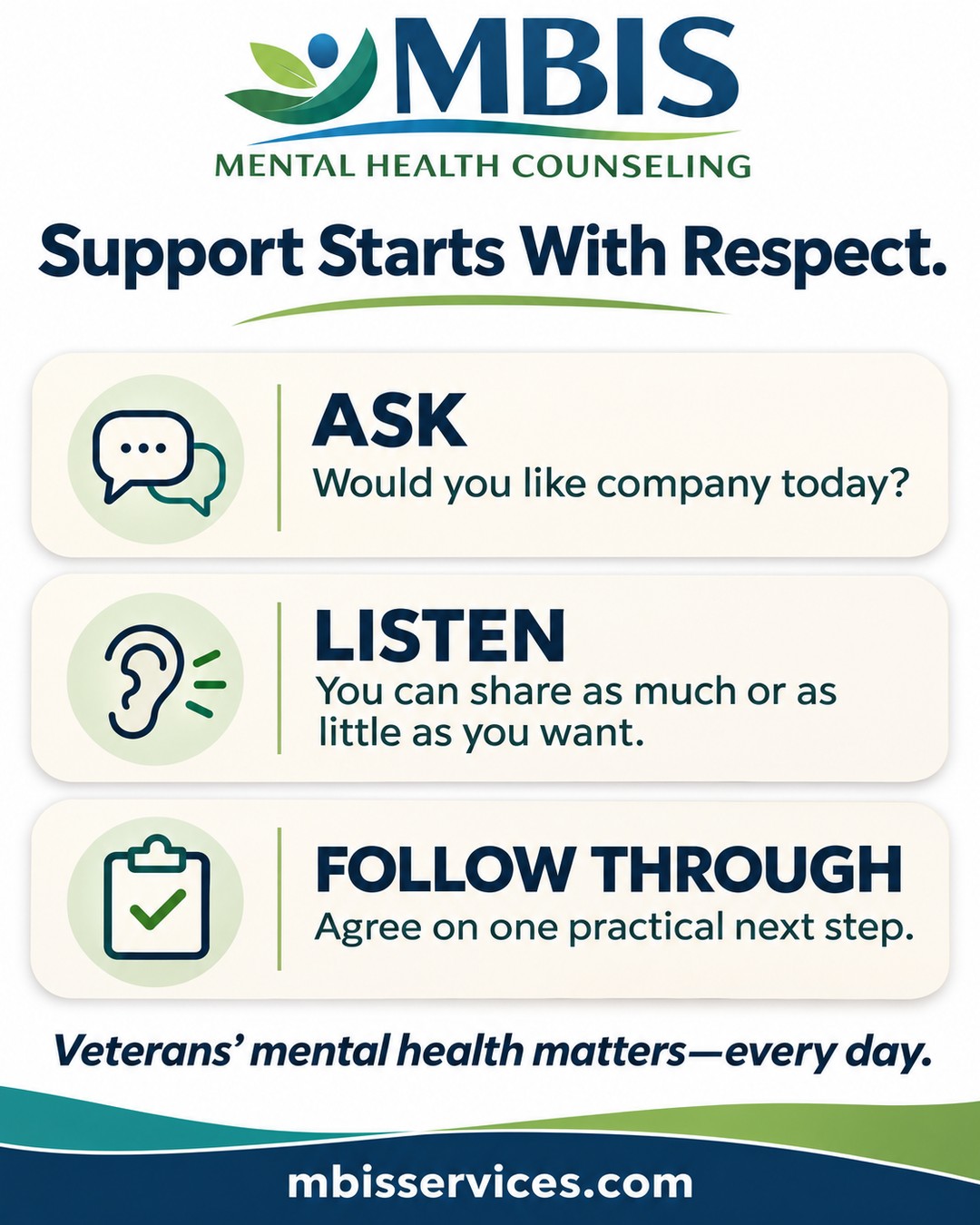
A simple plan for a veterans mental health check-in
Keep the first conversation small enough to feel manageable. Ask whether now is a good time, listen to what the person chooses to share, and identify one next step together. For example: “Would it help if I sat with you while you write down questions for your appointment?”
Afterward, follow through on the specific action you agreed on. Avoid repeatedly requesting updates about private treatment details. Ask what kind of follow-up feels welcome. Someone may prefer, “How was your week?” to a question about therapy every time you speak.
If you are the veteran seeking support, you can state a preference directly: “I want company, not advice today,” or “Could you help me compare appointment options?” You are allowed to ask for support that matches your needs.
For a community group planning Veterans Day recognition, offer choices rather than requiring personal testimony. A quiet gathering, an optional conversation, or an accessible volunteer activity can welcome different preferences. Ask before taking photographs or sharing names online. A person can decline publicity and still be fully included.
Keep offers of support separate from promotion. Do not ask a veteran to disclose a diagnosis, describe trauma, or share a treatment story to take part in an activity. Thoughtful planning makes room for privacy, ordinary connection, and a person’s right to choose how they participate.
Veterans mental health resources in Queens and Staten Island
For local VA and Vet Center options, use the official VA location finder and confirm services, eligibility, and availability with the facility. The closest location may not offer every program, so ask about the specific type of support you need.
For information about MBIS, explore our counseling services or contact our team in Queens or Staten Island. Ask about current availability, fees, insurance, and whether a clinician’s experience matches your needs. This article does not establish a VA affiliation, veteran-specific program, coverage arrangement, or guaranteed appointment.
Urgent safety: If someone is in immediate danger or unable to stay safe, contact emergency services or go to the nearest emergency department. The VA’s official mental health page also provides immediate-support pathways. A routine counseling inquiry or website comment is not an emergency service.
Frequently asked questions about veterans mental health
Should I ask a veteran about combat?
Do not assume combat experience or request personal details. Ask what they would like to talk about and respect a decision not to discuss service.
Can I offer support if I have never served?
Yes. Listen respectfully, ask what would help, and follow through on practical offers. You do not need an identical experience to care or help someone explore appropriate resources.
Does every veteran need PTSD treatment?
No. Military service alone does not establish a diagnosis or treatment need. A qualified professional can assess specific concerns and discuss appropriate options.
Can families ask about support too?
Yes. Family members can seek information and support for their own needs. Eligibility for particular VA, Vet Center, or community programs should be confirmed directly.
Sources and further reading
U.S. Department of Veterans Affairs: Veterans Day; VA mental health services; VA resources for families and friends; and National Center for PTSD: How Can I Help? Conversation scripts and practical examples in this article are original educational illustrations.