

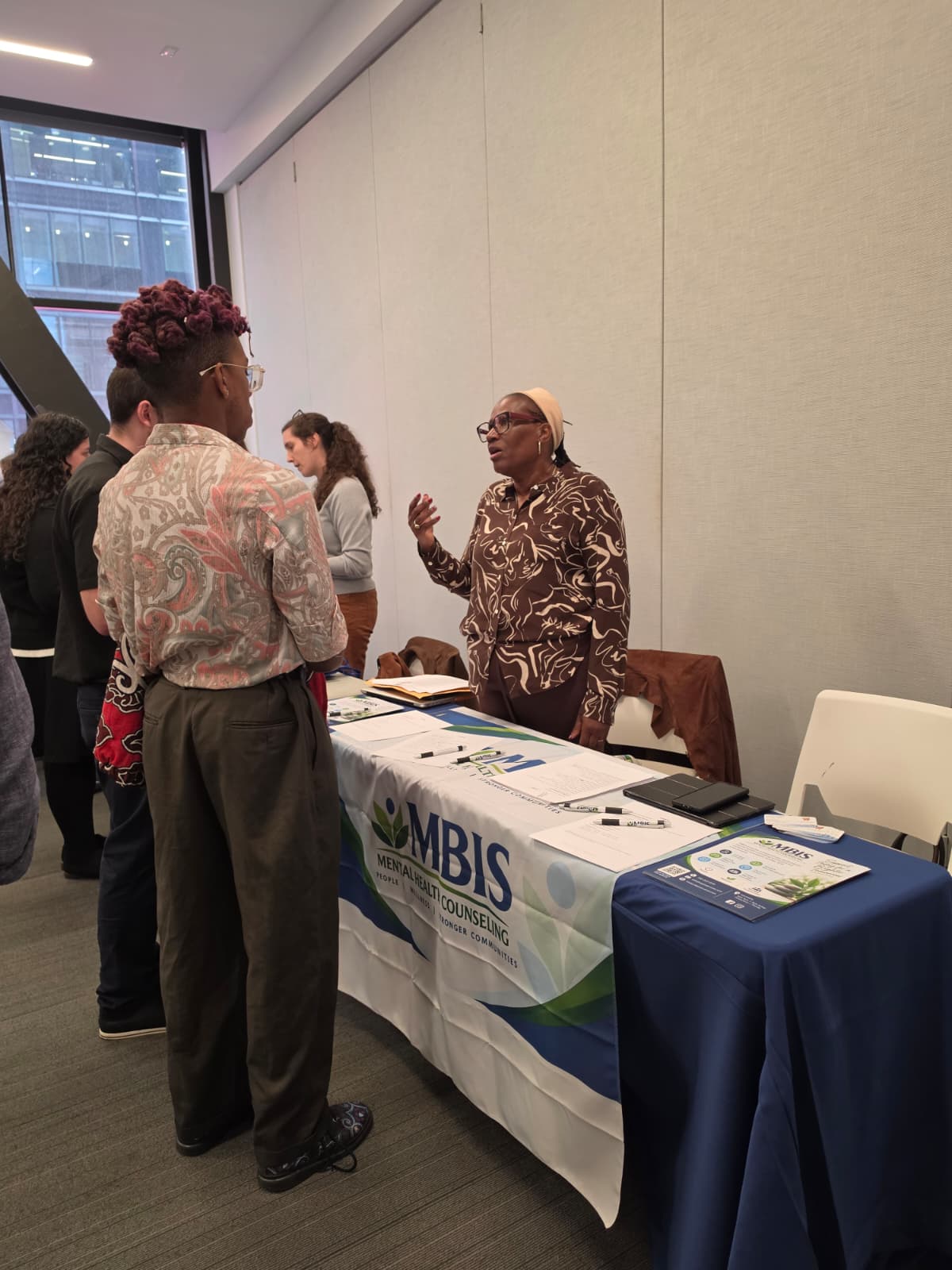
MBIS Mental Health Counseling was proud to participate in the Touro University Internship Fair, where we met students preparing for careers in mental health. The fair gave us a chance to hear what students hope to learn, share the work represented on our standing banner, and talk about the role of mentorship in preparing future clinicians.
Thank you to everyone who stopped by our table and expressed interest in connecting with MBIS. You can also see the photos and original announcement in the MBIS Facebook post about the Touro University Internship Fair.
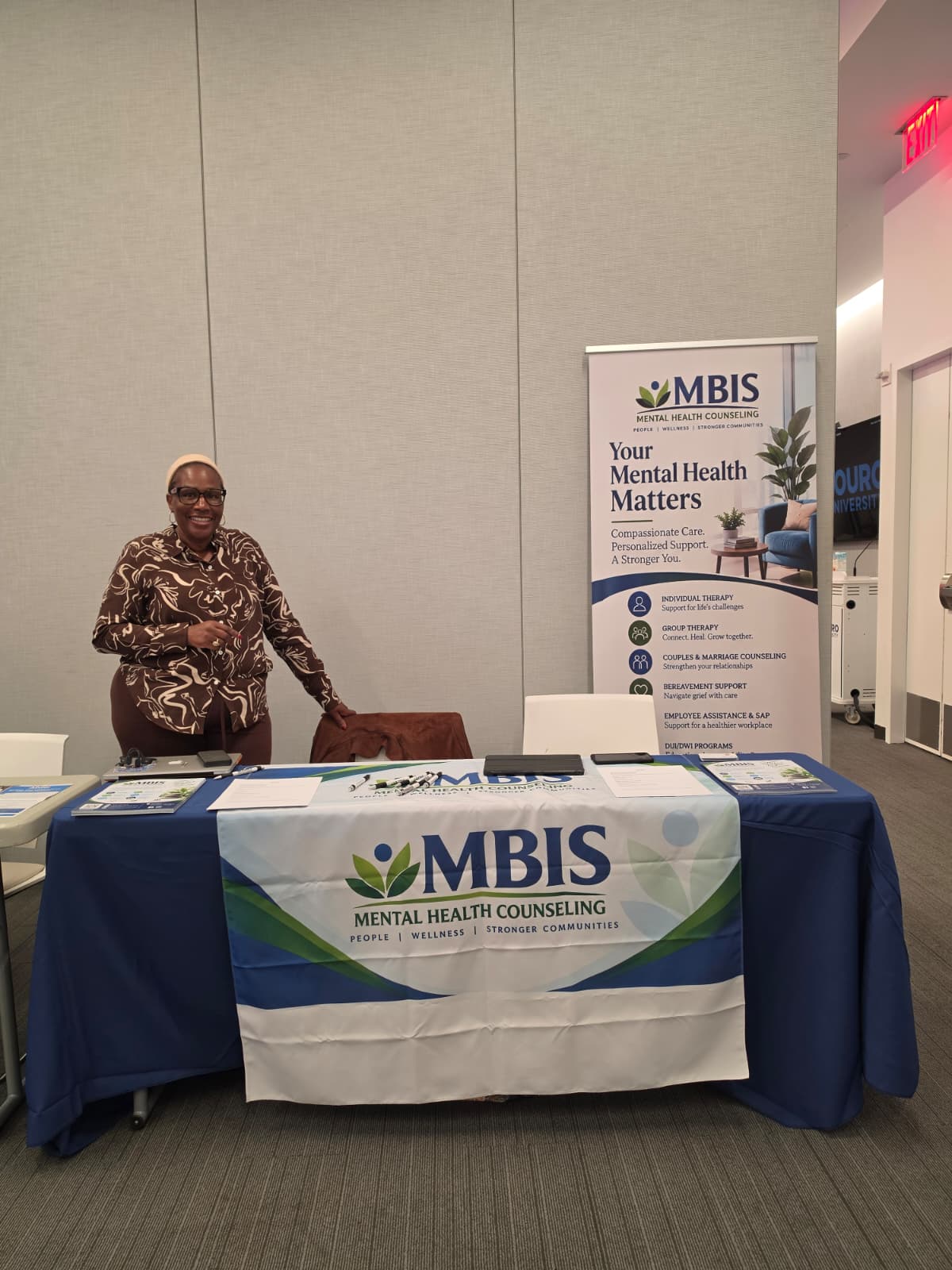
What the Touro University Internship Fair meant to MBIS
Internship fairs give students a chance to put faces to the names of organizations they may otherwise know only from a website or a list of potential sites. A few minutes at a table can help a student decide whether to ask for a longer conversation, bring a specific question to a fieldwork coordinator, or look more closely at a particular area of practice.
For MBIS, the fair was an opportunity to meet aspiring mental health professionals and hear about the interests they bring to the field. We appreciated the energy at our table, the positive feedback, and the interest students expressed in staying connected. Their curiosity is part of what makes gatherings like this worthwhile. A question from someone entering the profession can also remind an experienced clinician what it feels like to make an unfamiliar decision for the first time.
We especially recognize our Clinical Director, Dr. Felicia Ivey-Toure, for her leadership and commitment to mentoring future clinicians. We believe that investing in people who are entering mental health care is an investment in the communities they will serve. Mentorship is one way to make that investment concrete. It gives early-career professionals space to practice explaining their decisions, reflect on feedback, and learn when to seek guidance.
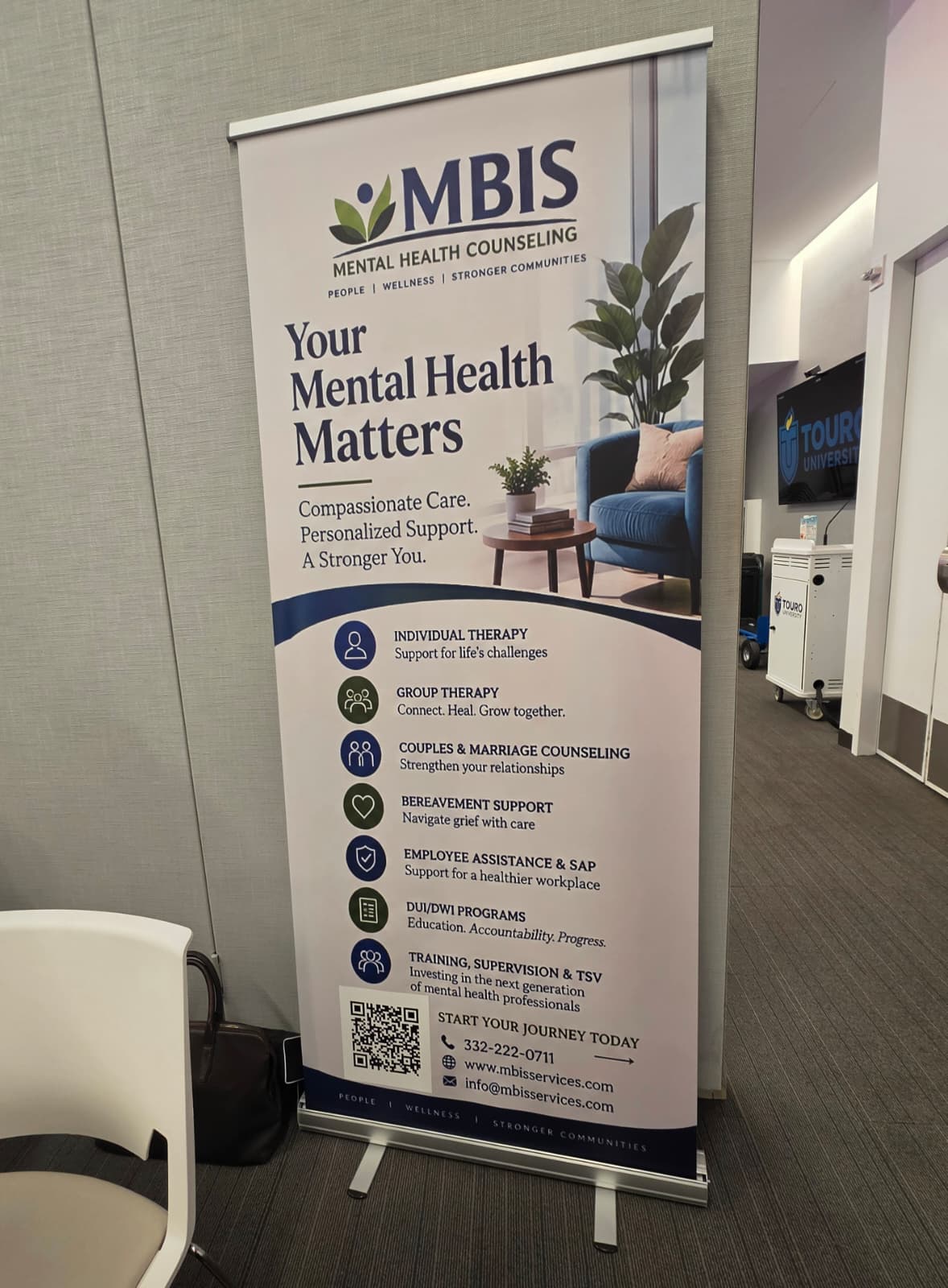
What the MBIS standing banner shared
Our banner led with “Your Mental Health Matters” and emphasized compassionate care and personalized support. For students exploring the field, the service list also offered a starting point for asking how counseling looks in different settings. The banner highlighted these areas of MBIS’s work.
- Individual therapy. Support for people navigating life’s challenges.
- Group therapy. Opportunities to connect and work on shared concerns in a group setting.
- Couples and marriage counseling. Support for people working on their relationships.
- Bereavement support. Care for people navigating grief and loss.
- Employee Assistance and SAP. Services connected to workplace well-being.
- DUI/DWI programs. Programs focused on education, accountability, and progress.
- Training, supervision, and TSV. Professional development work that reflects our commitment to future mental health professionals.
Each area can prompt a different question. A student interested in working with groups might want to understand how a facilitator makes room for quieter participants. Someone drawn to individual counseling might ask how a clinician prepares for an intake or checks that a client understands the next step. Our first therapy appointment guide gives a client-facing example of how a practice can explain that first encounter. For a separate look at how we communicate about a specific type of support, see our guide to navigating Thanksgiving grief.
What students can do after an internship fair
The following suggestions can help you turn an introduction at the Touro University Internship Fair or another campus event into a focused follow-up. Start by reviewing your own program’s materials, then use your notes from the fair to decide which questions a prospective site is best placed to answer.
Write down what you wanted to learn
Choose one or two learning goals. You might want to understand how clinicians prepare for an intake conversation, adapt explanations to a client’s needs, or use supervision to make sense of a challenging interaction. A goal like “I want to learn how a counselor explains the purpose of an intake and checks for understanding” makes it easier to ask a specific question in a follow-up.
Set aside a few minutes to make a note about each organization you spoke with. Include what stood out, what you still need to confirm, and what follow-up the representative invited, if any. Those notes are especially helpful when you met several organizations and their materials cover similar services. Keep the note about your own learning and the information the representative shared publicly.
Check fieldwork requirements with your program
Ask your school which deadlines, documents, and approval steps apply to your program. Touro University School of Health Sciences publishes fieldwork guidance for its Clinical Mental Health Counseling students, including information about supervised placements and site approval. Use the process set by your own program and confirm the details with your fieldwork coordinator before committing to a start date or counting hours.
It helps to distinguish the questions for your school from the questions for the placement site. Your coordinator can tell you how the program defines eligible activities and what school documentation is required. A potential site can explain what it may have available, who applicants should contact, and what its own review process involves. When answers overlap, ask who can confirm the requirement in writing so both sides are working from the same information.
Ask what supervision and feedback look like
Ask for a description of a typical week at the stage you would be entering. You might ask who would supervise you, how often feedback is discussed, what preparation is expected, and how trainees raise questions between scheduled meetings. Ask whether activities and responsibilities change over time and how supervisors decide when a trainee is ready for the next step.
One way to make the conversation more concrete is to ask for a general example that protects client confidentiality. You might say, “How would a trainee typically prepare for a supervision meeting when they want feedback on their communication?” That question makes it possible to discuss the learning process without asking for details about anyone’s care.
Consider whether the schedule is workable
Compare any potential schedule with class meetings, work shifts, other commitments, and travel time. If you expect to travel between boroughs on a class day, map the trip at the time of day you would actually make it. If the schedule depends on a particular commute or on a required supervision block, ask about that detail early. It is easier to make a decision when the routine is clear.
Also ask when the site expects to know its availability. You can use that date to decide when to follow up or when to ask your program about other prospects. A short note with a date and a next step can be especially helpful to students tracking several conversations at once.
Send a short, specific follow-up
Start with your name and program, mention where you met, and ask who handles training or supervision inquiries. If you have one question that affects your next decision, add it to the message. For example, “I enjoyed speaking with your team at the fair. I’m exploring supervised fieldwork for an upcoming term. Could you tell me whom to contact about your process and what information I should prepare?”
If you receive instructions to send a résumé or school documents, use the channel the recipient specifies. A first message usually needs only enough context for the organization to direct it to the right person. If you still have to confirm your school’s timeline, say so. That gives both sides room to talk about timing before making commitments.
Why clinical mentorship matters beyond the fair
In a classroom, students have time to think through an example and describe how they would respond. In a practice setting, they also learn to communicate in the moment, listen carefully, and organize the questions that need follow-up. A good supervision conversation can make that learning visible. It gives a trainee a place to reflect on what they noticed, check how they understood the interaction, and prepare for a similar situation in the future.
For example, a trainee might realize that they used language a client was unfamiliar with while describing what happens at the end of an intake. In supervision, they could practice a simpler explanation and ask how to check for understanding. That small change can make the next conversation clearer. It also shows why feedback about ordinary interactions deserves as much attention as feedback about difficult decisions.
We value the chance to talk with students early, while they are still learning which settings, questions, and populations interest them. The fair gave us space for those introductions, and we are grateful to the students who chose to spend part of their day with us.
Questions to take to your next fieldwork conversation
Use the fair as a starting point for a more detailed conversation. Ask questions that give you enough information to compare possible settings or decide whether to follow up. For example, if two sites describe their supervision as supportive, ask each one what a trainee typically brings to a meeting and how the supervisor gives feedback afterward. The answers can tell you more about how you would learn in that setting.
- What would I learn during the first few weeks? Ask about orientation, expectations, and who can answer questions while you learn the routine.
- How are learning goals set and reviewed? Find out whether students set goals with their supervisors, when progress is discussed, and how priorities can change during the term.
- What happens when I need help between meetings? Ask how trainees reach the appropriate person and which questions should be raised promptly.
- What should I confirm with my school? Ask what information the site typically provides to fieldwork coordinators and who can answer questions about documentation.
Consider how much detail you need before a first follow-up. If your program has an early deadline, start with availability and approval steps. If the timing is flexible, ask about supervision and the learning environment. Keep a short record of who answered, which questions are still open, and the next date you need to check. Afterward, review your notes with your school contact so you can identify any gaps before accepting an offer.
Students can also use these questions when a fair introduction leads to an informational conversation. In that setting, the goal might simply be to understand a clinician’s work or learn which courses would help prepare for a particular setting. Even if a site has no openings during your term, the discussion can give you a clearer idea of what to look for elsewhere.
Frequently asked questions
Where can I see the original Facebook update?
The original MBIS Facebook announcement includes the event photos and the team’s thank-you message to students who visited the table.
Who can confirm whether a placement meets my school’s requirements?
Start with your program’s fieldwork coordinator or the office responsible for placement approval. If you attended the fair through Touro’s Clinical Mental Health Counseling program, consult its fieldwork guidance and ask the program how to submit a site for review.
How can I ask MBIS about training or supervision?
Use the MBIS contact page to ask about current availability, whom to contact, and any next steps for your program or timeframe. You can also call (332) 222-0711 or email info@mbisservices.com.
Thank you again to the students who visited our table at the Touro University Internship Fair. See more community programs and recaps on the MBIS Event Highlights page.
MBIS Mental Health Counseling
People | Wellness | Stronger Communities
