

Holiday stress can begin long before the first gathering. Invitations, travel plans, gift lists, and family expectations can make a season of connection feel like another full-time job. You may love your family and still need a shorter visit, a smaller budget, or a break from personal questions.
For adults balancing work, caregiving, and daily life in Queens, Staten Island, and across New York City, planning ahead can create more room for meaningful moments. Healthy family boundaries help you decide what you can offer without making promises your time, finances, or energy cannot support.
Quick answer: To manage holiday stress, choose your priorities, set realistic limits, communicate them clearly, prepare for difficult conversations, share responsibilities, protect everyday routines, and seek support when distress affects daily life. Start with one manageable change rather than trying to redesign every family relationship.
Published October 27, 2026. Educational information from MBIS Counseling Services; this article does not provide a diagnosis or an individualized treatment plan.

Why can holiday stress feel so intense?
The season often brings several demands at once. A gathering may involve arranging transportation, finding childcare, navigating a strained relationship, and paying for food or gifts. Even enjoyable plans require effort. When commitments accumulate, the gap between what is expected and what is possible can feel overwhelming.
Not everyone experiences the holidays in the same way. You may be grieving, separated from loved ones, working through the season, observing a different tradition, or choosing not to celebrate. A cheerful social media feed does not tell you what another household is experiencing behind the scenes.
Notice your own early signals: repeatedly checking messages with dread, feeling tense before a family call, losing patience over small tasks, or struggling to unwind after plans change. These experiences do not automatically mean you have a mental health condition. They can be useful prompts to review the demands on your plate.
What are healthy family boundaries?
A boundary describes your limits and the actions you can take to honor them. It can address time, money, privacy, physical contact, hosting, or communication. It works best when it is specific enough to guide a real decision.
For example, “I can visit from two until four” offers clear information. “Everyone needs to stop being demanding” leaves other people guessing about what will change. You can ask relatives to respect a limit, but you cannot guarantee their response. Your plan should include what you will do if the conversation or request continues.
Boundaries can also reflect care and cultural values. In a family that places a high value on showing up, you might attend briefly, contribute a dish, or arrange a separate call. The goal is a sustainable choice that fits your circumstances, rather than a rule that every family must follow.
7 practical ways to manage holiday stress
1. Choose what matters before filling the calendar
Write down two or three experiences you want to make room for. These might include sharing a meal with a sibling, keeping a meaningful tradition, or having a restful morning with your children. Then compare those priorities with the commitments already competing for your attention.
Try sorting invitations into “important to me,” “possible if capacity allows,” and “not this time.” Include travel and preparation in your decision. A two-hour dinner may also require a long commute, shopping, and recovery time after a demanding workweek.
Before answering a new request, use a pause: “Let me check our plans and get back to you tomorrow.” That small gap can help you make a deliberate choice instead of agreeing in the moment and feeling trapped later.
2. Set time and spending limits you can maintain
Decide what a manageable visit looks like before you arrive. Consider your transportation, work schedule, health needs, and responsibilities at home. If another person depends on your care, arrange a safe handoff before changing the schedule.
For spending, choose an amount that fits your household rather than a family tradition you cannot afford. You can suggest a gift exchange, a shared meal, or an experience that does not require a purchase. There is no need to disclose private financial details to explain every decision.
A practical holiday stress plan can be simple: one gathering on the weekend, a clear gift budget, and no additional hosting. Write the limits somewhere you can review them when a last-minute invitation arrives.
3. Communicate early, clearly, and with warmth
Whenever possible, tell people your plans before they have made arrangements around you. Use a short statement about what you can do, followed by an alternative only if you want to offer one.
For example: “We can join lunch, and we will head home before dinner.” Or: “I am keeping gifts small this year. I would enjoy exchanging handwritten notes.” A calm, direct message is easier to understand than a long explanation with several uncertain exceptions.
If someone is disappointed, you can acknowledge that feeling without changing your answer immediately. “I understand you hoped we could stay longer” can stand alongside “Our departure time is still four.” Rehearse the sentence with a trusted person if saying it aloud feels unfamiliar.
4. Prepare for personal questions and tense conversations
Think about the subjects you prefer to keep private. Questions about relationships, parenting, health, appearance, or employment may feel especially uncomfortable in a group. You can prepare a brief response and a way to shift the conversation.
Try: “I am keeping that private for now. Tell me about your new project.” If the question continues, repeat your limit rather than supplying more information simply to end the discomfort. You can also step away, help in another room, or leave at the time you planned.
Ordinary disagreement and unsafe behavior require different responses. If you fear threats, coercion, or retaliation, a direct confrontation may increase risk. Prioritize safety and seek individualized professional or domestic violence support before deciding how to communicate a boundary. You do not owe attendance at an unsafe gathering.
5. Share the work with specific requests
Holiday stress often grows when one person quietly manages every detail. A general request to “help more” can leave the same person assigning and checking every task. Instead, identify a complete responsibility someone else can own.
Ask a relative to coordinate transportation, confirm arrival times, and notify guests about changes. Another person might plan and bring a dish, including checking dietary needs and cleaning up its containers. Agree on the task and timing so that everyone understands the arrangement.
If you are already managing ongoing care, our guide to caregiver burnout and asking for support offers additional ways to make invisible work easier to discuss. Simplifying a tradition is also an option when there is not enough help to carry it out.
6. Protect routines and leave room for mixed emotions
A full calendar can crowd out ordinary needs. Keep meals, rest, movement, and existing treatment appointments in view when planning. If you take prescribed medication, discuss any travel-related questions with your clinician or pharmacist rather than changing your routine on your own.
Choose a small reset you can realistically use: a quiet cup of tea, a short outdoor break when accessible, or a few minutes away from notifications. These activities are supports, not a requirement to stay cheerful or a substitute for care when symptoms need attention.
Grief and enjoyment can exist together. You might keep one tradition, change another, or choose a quieter day. If colder months bring a recurring pattern of mood changes, read our seasonal depression guide and speak with a qualified clinician about your experience.
7. Review your plan and ask for support
After a visit or conversation, ask what felt manageable and what needs adjusting. Perhaps the gathering was enjoyable but the travel was too much, or a shorter visit helped you participate more comfortably. Use that information when making the next plan.
Talk with someone who respects your choices. You can practice a difficult message, ask them to check in after an event, or make a separate plan that gives you something supportive to anticipate. If you feel isolated, a low-pressure connection may be more useful than forcing yourself into a large gathering.
Consider professional support when holiday stress is persistent, worsening, or interfering with sleep, work, relationships, or daily responsibilities. You do not have to wait until the season ends to ask for help. Our guide to seeking mental health support explains more signs to discuss with a professional.
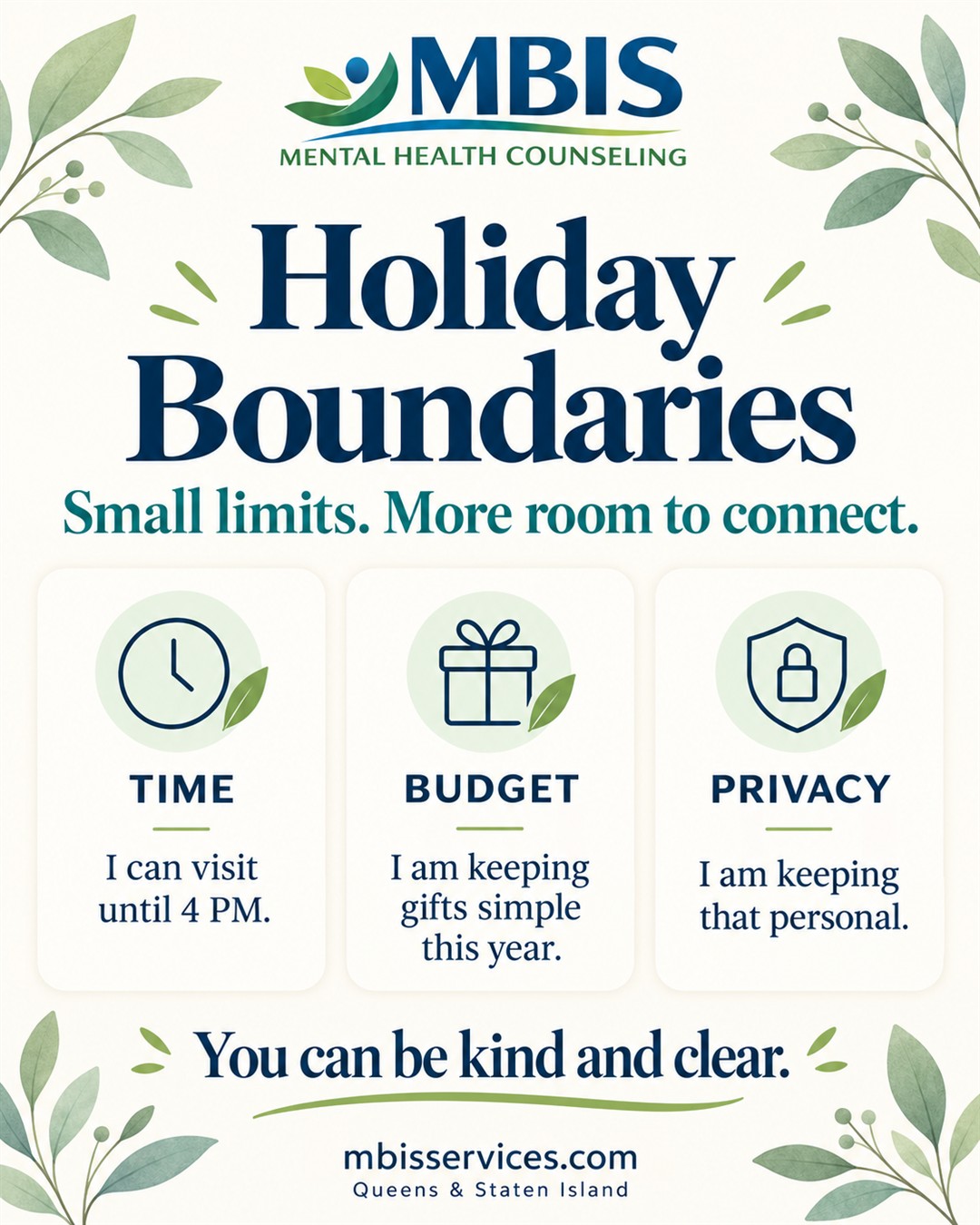
Simple boundary scripts for holiday stress
These examples are starting points to adapt to your voice and circumstances. Use them only when it feels safe to communicate directly.
- Time: “I can come for dessert, but I cannot stay for the full evening.”
- Money: “My gift budget is set. I would love to plan something within it.”
- Privacy: “I am not sharing updates about that right now.”
- Hosting: “I cannot host this year. I can bring one dish if someone else hosts.”
- Repeated pressure: “I hear that you would prefer another plan. This is what I can offer.”
Discomfort after setting a limit does not automatically mean the limit was wrong. Give yourself time to reflect. If you spoke harshly, you can repair the tone while keeping the underlying boundary: “I want to say that more respectfully. I still cannot take on the extra task.”
A five-minute plan before the next invitation
Choose one upcoming request and complete these sentences: “What matters most to me is…,” “What I can offer is…,” “What I cannot take on is…,” and “If I feel overwhelmed, my next step will be….” Keep the plan short enough to use.
For a New York household, that might mean checking travel time between boroughs, confirming who will cover caregiving duties, and deciding when to leave. A clear plan does not remove every difficult emotion. It gives you fewer decisions to make while under pressure.
Holiday stress counseling support in Queens and Staten Island
MBIS Counseling Services provides behavioral health and counseling services. Contact the team to discuss your concerns, ask about current clinician availability, and learn which services may fit your needs. Counseling can provide space to explore relationship patterns, practice communication, and develop a personalized approach to stress.
MBIS has offices at 119-29 80th Road, STE A, Kew Gardens, NY 11415, and 1110 South Avenue, STE 63 & 65, Staten Island, NY 10314. Call (332) 222-0711 or visit the contact page to ask about appointment options, fees, insurance, and service eligibility. Availability and coverage should be confirmed directly.
Frequently asked questions about holiday stress
Is it okay to decline a family holiday invitation?
Yes. Consider your capacity, responsibilities, and safety when deciding. A brief, respectful answer can be enough. You may suggest another way to connect if you want to, but an alternative is not required for every invitation.
How can I set a boundary without feeling guilty?
You may still feel guilty, especially when a family pattern is changing. Focus on making a clear, respectful decision rather than waiting for all discomfort to disappear. Discuss persistent guilt or fear with a trusted person or counselor.
What if a relative keeps pushing after I say no?
Restate your limit briefly and decide what action you can safely take, such as ending the conversation or leaving. If you fear retaliation or abuse, seek individualized safety support instead of relying on a communication script.
When should I seek counseling for holiday stress?
Consider counseling when distress is hard to manage, keeps returning, or affects everyday functioning. A clinician can help assess your needs and discuss appropriate options. Seek urgent help for an immediate safety concern rather than waiting for a routine appointment.
Sources and further reading
The practical scenarios and scripts above are illustrative examples, not accounts of MBIS clients. For additional guidance, see NAMI: How to Prioritize Self-Care During the Holidays, UC Davis Health: Managing Mental Health During the Holidays, and American Psychiatric Association: Seven Ways to Cope with Holiday Stress.

